

Japanese companies will finance investments valued at $36 billion in energy and minerals projects in Ohio, Texas and Georgia as part of a trade agreement that will cut U.S. tariffs on Japanese imports to 15%, according to the Trump administration. The announcement is part of Japan’s 2025 agreement to invest $550 billion over the next four years at the direction of the U.S., with the funds aimed at rebuilding and expanding core American industries. In October, the Trump administration provided details on Japanese investments of up to $332 billion to…
Posts published in “Finance”

Japan is preparing to lift long-standing restrictions on lethal weapons exports, marking another step in the erosion of its post-war arms export taboo. While the reform creates new diplomatic and commercial opportunities and allows deeper security cooperation with regional partners, Japan’s defence industrial base remains small, costly and capacity-constrained. Domestic procurement demands and labour shortages mean exports will likely remain modest, limiting the policy’s practical and strategic impact on regional military balances. Prime Minister Sanae Takaichi’s government is looking to loosen Japan’s long-standing restrictions on weapons exports, marking another step…
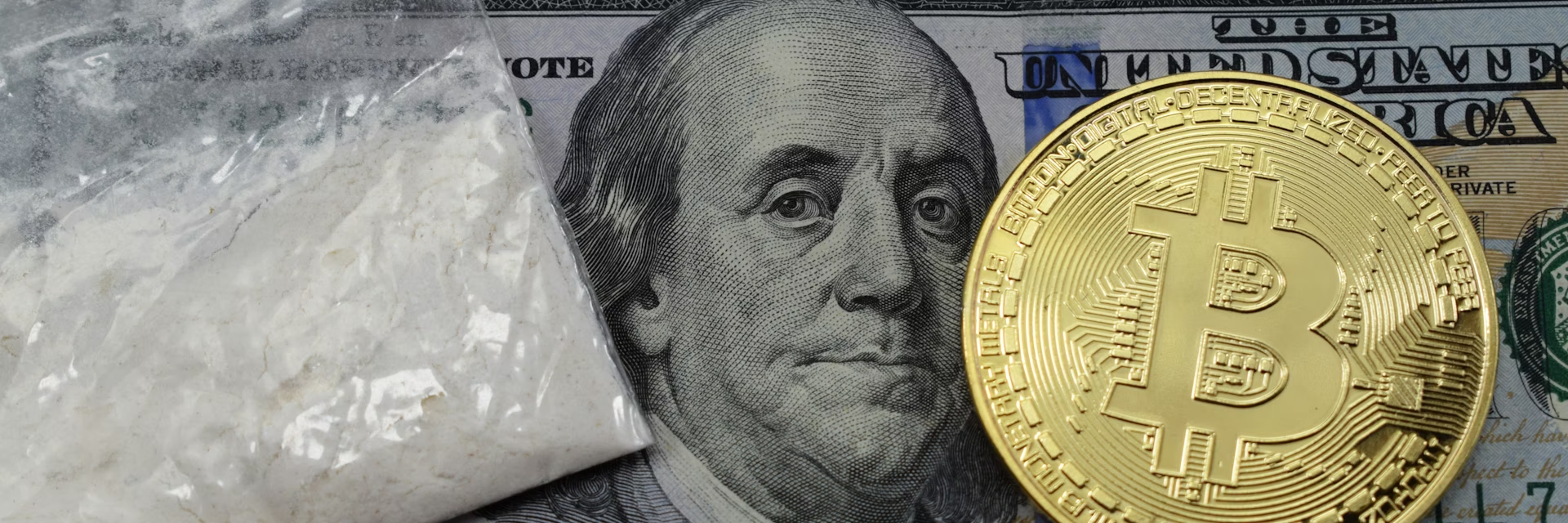
The cocaine market exploded between 2014 and 2023. Production in Colombia increased more than sevenfold to nearly 2,700 tonnes, according to the United Nations Office on Drugs and Crime (UNODC). Behind the scenes, drug traffickers find equally illicit ways to pay their suppliers and foot soldiers, or to spend the proceeds of their criminal trade. Their solution? Money laundering. It is estimated that 25% of the funds collected is laundered. Criminals generally launder money in three stages: firstly, they inject it into the financial system; secondly, they layer it with…

Few ideas in global finance generate as much anxiety as de-dollarization. To some Western observers, any attempt to reduce reliance on the US dollar is automatically framed as a political challenge to American power. Yet for much of the developing world, the conversation is far less ideological and far more practical. The push to diversify global payment systems and promote the use of local currencies is not about confrontation; it is a response to economic realities that many countries have lived with for decades. The dominance of the dollar has…